
Saint Basil's Cathedral: A Symbol of Russia
- Dec 26, 2023
- 2 min read
When I think of Moscow, the first image that comes to mind is that of a towering church in the Red Square, embellished with multicolored onion domes atop its many towers. I have never been to Moscow, yet I feel this structure perfectly encapsulates the soul of Russia. This is Saint Basil's Cathedral.
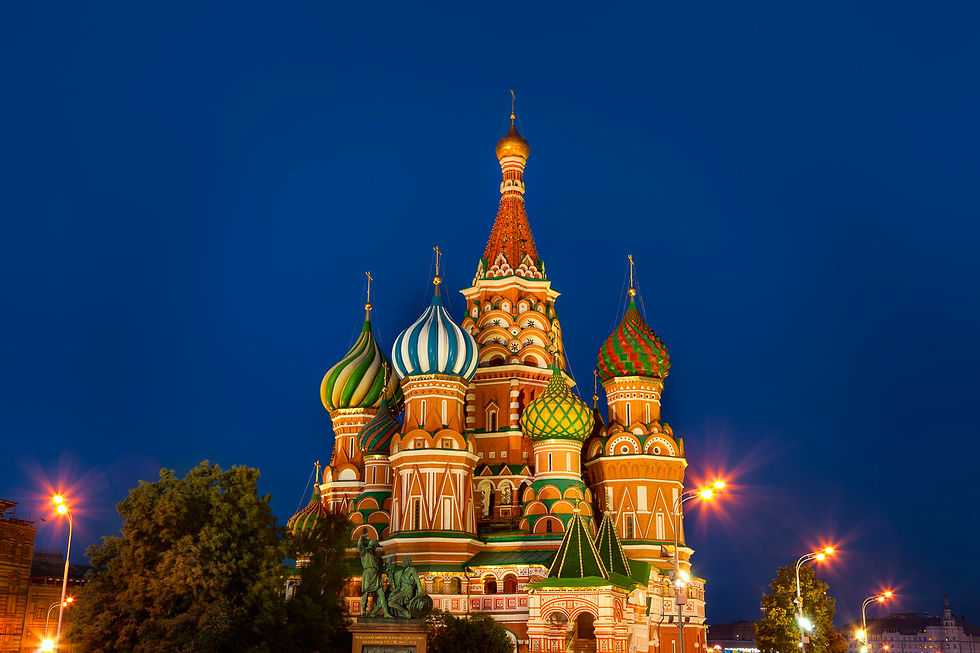
The church is known officially as the Cathedral of the Intercession of the Most Holy Theotokos on the Moat and informally as Saint Basil's Cathedral. Examining the history of this building helps illustrate a history of Russia over the centuries, and it also highlights the role of religion in the country. The church began as a small stone structure in the middle of a marketplace by the Kremlin, constructed in the late 14th century, which was known as the Trinity Church. During Tsar Ivan IV's rule during the war against the Khanate of Kazan in the mid 16th century, he would erect a wooden memorial church around the original stone church for each victory he won. Ultimately, eight new churches were built around the Trinity Church, and it was consecrated in 1561.
Saint Basil's Cathedral represents a remarkable achievement of architectural ingenuity. Its unique architectural style has left historians and architects debating the cultural inspiration for the church. The arches of the structure appear to take inspiration from Byzantine architecture, but some claim that the building was a recreation of Qolşärif Mosque, which was destroyed by Russia in the war against the Khanate of Kazan. The color scheme of Saint Basil's Cathedral is also quite unique. In the 17th century, Russians began favoring bright, pronounced colors in their art, which they incorporated into the paint the church was coated with.
During the period of Soviet control, Saint Basil's Cathedral was secularized and nearly demolished, as it presence conflicted with Stalin's plans urbanist plans. Thankfully, preservationists were able to argue against the church's demolition, and it survived until the end of the USSR, serving as a state historical museum. Now, weekly church services have resumed at Saint Basil's Cathedral, and it stands as a notable symbol of Russian history and religion.


Comments