
Peter the Great's Gateway to Europe
- Jul 2, 2024
- 2 min read
St. Petersburg is a very unique city. Like Venice, it is built on an island in a swamp, but it also holds the title of the northernmost metropolis with a population larger than one million. St. Petersburg stood as the capital of Russia for over two centuries, yet it is characterized by its distinct Western European architecture. To understand this city, we must look back to the Great Northern War at the start of the 18th century.
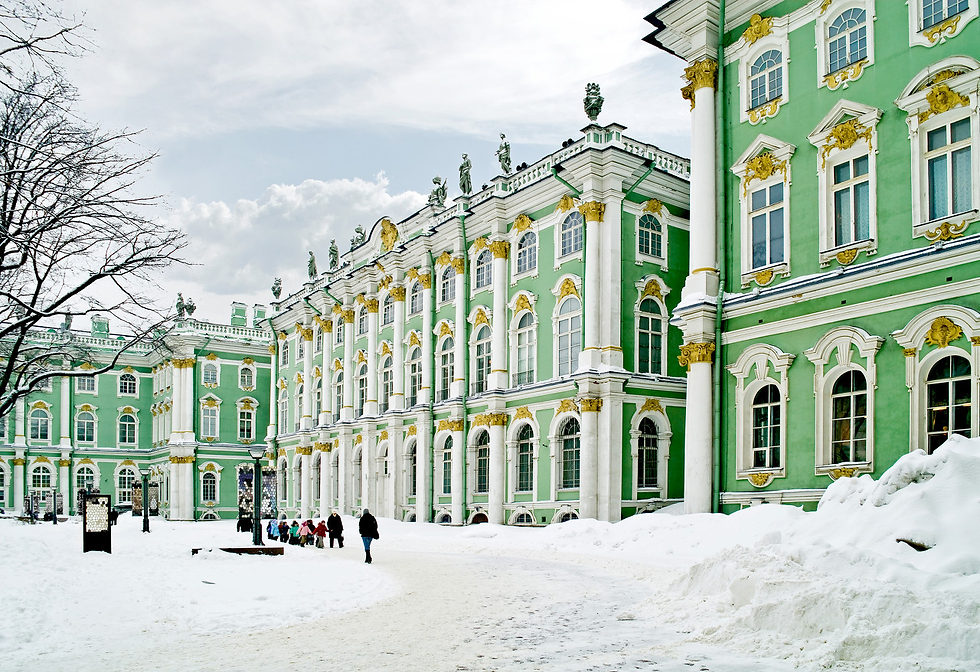
The Great Northern War was fought between the Tsardom of Russia and the Empire of Sweden from 1700 to 1721. In 1703, Tsar Peter the Great captured the Swedish fortress of Nyenskans. It was Peter's desire for Russia to emerge as a great European power, but most of Russia remained undeveloped compared to nations like France and Spain. Peter decided to use the newly captured Nyenskans as the grounds for a new, modern, Russian capital. The location was also strategic for economic reasons, as it lay on the coast of the Baltic Sea, which allowed for trade access to the rest of Europe over sea.
Construction commenced on Peter's new city, at the cost of the lives of thousands of serfs, and it was completed in 1712. It should be noted that the tsar named it St. Petersburg after the apostle, not himself. In order to truly bring about Peter's vision of St. Petersburg as a gateway, or window, into Europe, he invited dozens of Italian and French artists, architects, and performers into the city. Architects like Domenico Trezzini and Francesco Rastrelli were vital in giving the city its distinct architecture, constructing works like the Winter Palace and the Peter and Paul Cathedral. Another Italian named Francesco Araja was even invited to become the maestro of the Empress's orchestra.
The history of St. Petersburg highlights the importance of cultural exchange in defining a nation, and the remnants of this exchange are still accessible to visitors today.

Comments